Your Mission Statement of Achievements and Love
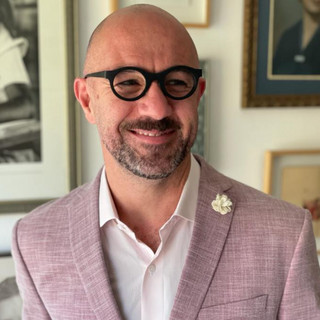

Since 2008, first as an Ontological Coach for C-suite executives and now in my work with couples, partners and individuals, conversations about purpose often emerge. I've written mission statements for my own life for as long as I can remember, using many methods along the way. One has stayed with me since my years as a FranklinCovey trainer: Stephen Covey's personal mission statement, from Habit 2 of The 7 Habits of Highly Effective People, "Begin with the End in Mind."
Covey called a mission statement a personal constitution. It is grounded in principles, not in a person, a job, or money. It describes two things: who you want to be and what you want to do.
Below is the exercise as I guide clients through it. The first steps draw on Covey's work. The last part is my own relational addition.
Pro-Tip: Do it in 20 minutes or less! Read the question, close your eyes, inhale and exhale deeply, maybe a couple of times, about the question, open your eyes and write.
Part One: Drawing on Covey
1. Imagine the end.
Picture attending your own funeral, three years from now. Four people speak: someone from your family, a friend, a colleague, and someone from your community. Write what you would want each of them to say about your character, what you contributed, and how you treated them. Take your time. This is the heart of the exercise.
2. Notice what sits at the center.
Covey observed that many of us organize our lives around one center: a partner, family, work, money, pleasure, friends, even an enemy or ourselves. Ask yourself honestly which one currently gives you your sense of security and direction. The invitation is to center your life on principles you trust, so that no single person or outcome holds that much power over you.
3. Name your roles.
List the five to seven roles that matter most in your life. Examples include partner, parent, son or daughter, professional, friend, community member, and yourself. For each one, write a sentence about how you want to show up.
4. Reflect.
When have I felt most alive and most myself?
What would I do with unlimited time and resources?
What are my natural gifts?
What values would I refuse to compromise?
What do I want to leave behind?
5. Draft.
Write in the first person and the present tense: "I am…," "I choose…," "I create…." It can be a paragraph, a list, or a poem. Aim for honest, not perfect.
6. Test it.
Is it built on principles I truly believe in?
Does it reflect the best of who I am?
Does it give me direction and energy?
What do I need to start, or stop, doing now?
7. Live with it.
A first draft is a beginning. Revisit it over the next few weeks, and let it change. Then read it weekly, see what comes up for you in your body, feelings that emerge, and edit if needed.
Part Two: The Relational Questions
Over the years, I've noticed something most purpose exercises leave out. They describe us at our best. Our relationships reveal us at our most reactive.
So I add three questions:
If my partner, or the person closest to me, spoke at my funeral, what would I want them to say about how I handled conflict, not just how I loved?
When I'm triggered, I want to be the kind of adult who…
This sentence names the distance between the pattern you learned to survive and the person you choose to be.
How do I use power with the people closest to me?
Do I share it, or do I take it, withdraw it, or give it all away?
Then choose one small, observable practice for this week that brings your answers to life. Make it something you or someone close to you could actually notice. For example: "When I feel criticized, I will pause and ask one question before I defend myself."
Insight matters. Change, what we do and how we act, matters more.
Why This Matters
A mission statement that only describes your best self is incomplete. Relational Maturity is who you are when it's hard: in the argument, in the disappointment, in the moment you want to win more than you want to connect. I'm still practicing this myself. That is the point. This is lifelong work, and we do it together.
Bring It to Our Work Together
If you're a current client, and work on this together, let's do it. If you're not working with me yet and this exercise stirred something, I'd be glad to talk. Book a consultation →
The funeral visualization, life centers, roles, and weekly review are adapted from Stephen R. Covey, The 7 Habits of Highly Effective People (FranklinCovey). The relational questions and practices are my own additions.


Comments